
The behavioral DNA hidden in AlsoAsked questions

Table of contents
Introduction
A strategic guide to understanding emotions, strategy, and trust using AlsoAsked questions.
There's more to a question than an answer, and there is more to a query than a result.
There is something we all do everyday collectively—the average person performs 4.2 searches per day on search engines and at least once a day on an LLM, and statistics show much of that results in zero clicks to brand domains. Welcome to the “Clickapolyse.”
So, now what? Do we just keep trying to reverse engineer systems or keywords to cobble together what works, what doesn't, and what might still work tomorrow?
You might think the answer is more content, but I say you don't need more content. You need more from it.
We are all using today’s tools to work with yesterday's knowledge. There is a way to get ahead of it all and it's simpler than you think. In fact, I use the following method for my clients every day.
We're not going to talk about keywords or algorithms, or fancy terms like ‘vectors’. Instead, we're going to look at the complex, emotional human mind behind every single one of your queries. Then, we'll decode what's really going on under the surface.
In short, I’m going to teach you how to read the human story that's hidden inside all that data in AlsoAsked questions. Because there is more to a question than an answer, and there is more to a query than a result.
To really get this, we've got to start with this incredible and true story. It's about a guy who kind of blows the lid off how we all make decisions. It's time for us to meet Elliot.
The Elliot Effect: How emotion drives the decision
In short, the ‘Elliot Effect’ is when logic meets paralysis and it’s a really good analogy for the user journey and how marketers build their content funnels to accommodate it (or fail to).

Back in the '90s, there was this patient, Elliot. He was studied by neuroscientist Antonio Damasio. Elliot underwent brain surgery to remove a life-threatening tumor. And while it saved his life, it also damaged the part of his brain that handles emotions. Intellectually, he was totally fine, but something really, really important was now missing.
Without emotions, Elliot basically became a human computer, a purely logical being. He could analyze anything perfectly. You could give him the most complex problem and boom, he would list out every single pro and con flawlessly.
And this is where it gets absolutely wild: You'd think he'd be the best decision maker on the planet, right? Nope. He was completely paralysed. We're talking hours of debating whether to go for lunch and what to eat or even what clothes to wear that day.
This is the big revelation: Without that instinctual feeling—that emotional nudge that says, ‘Yeah, this is the one,’—pure logic doesn't give you clarity. It leads to total paralysis.
Does this sound familiar at all? Because this brings us right back to our world right now. Every single day, your customers (and probably you, too) get trapped in this exact same loop of analysis paralysis, totally overwhelmed by information, unable to make a confident choice.
Are we all Elliot sometimes?
Every day, millions of digital ‘Elliots’ use the web and LLMs to search for answers, stuck in analysis loops that pure logic alone can't resolve. They're not lost or confused–they're overwhelmed by choices and decisions where emotional markers are missing, trapped by content written for egos and algorithms over ethos.

We are all digital Elliots sometimes: You've got the B2B CEO, it's 2 a.m., she's got 17 tabs open for enterprise security solutions, and she's just completely stuck. Or, the marketer looking for new tech–he's not just comparing features, he's making a huge career move and needs to feel good about it. And hey, what about the parent searching for the best laptop for college? It's not about the specs, it's also about the feeling of being a good parent. They're all paralysed.
This is where we find the real gold mine hidden in all that AlsoAsked data. Take a look below at the branching questions people ask.
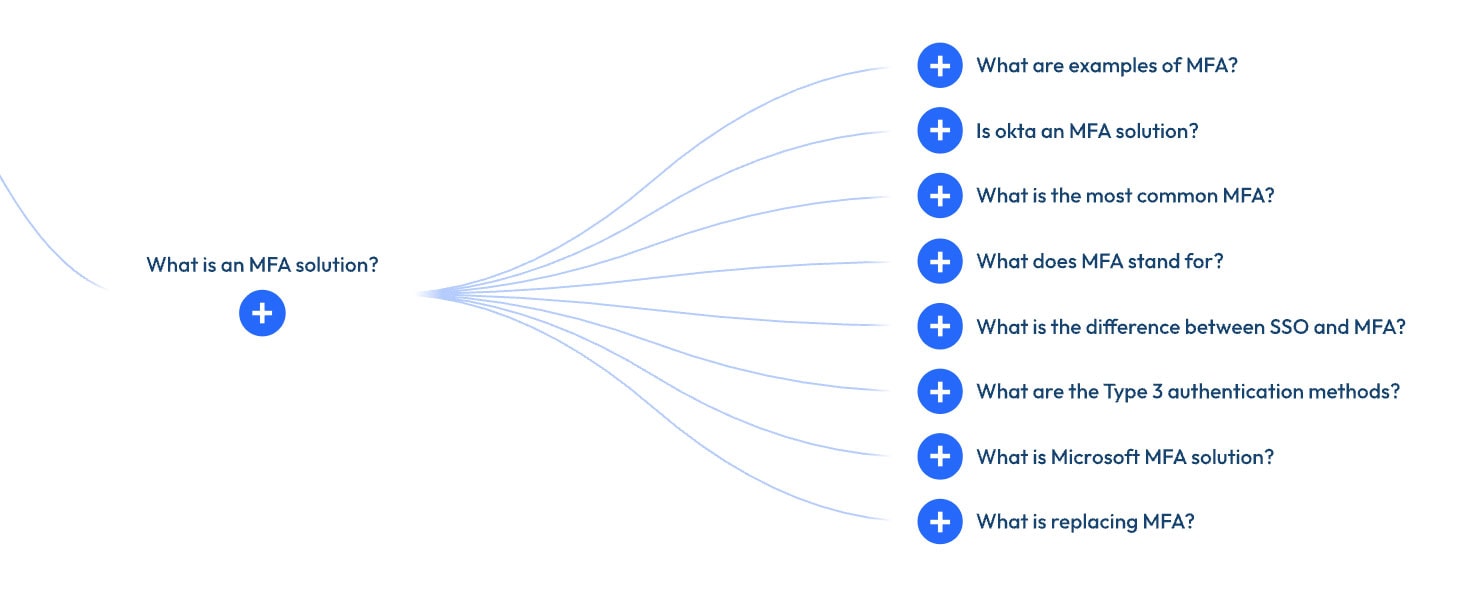
What about this versus how does that compare? That's not just a random list of keywords. It's a literal diagram of how your user’s brain is working. It's a cognitive map showing the path they're taking to try and escape that psychological tension. And, it gets even more useful.
AlsoAsked structures those questions through real-time analysis of Google's People Also Ask, organising it into hierarchical branching structures that reveal the natural decision process (i.e., the cognitive reasoning pathways people follow when making complex choices).
Those branching question trees aren't random keyword opportunities–they're cognitive maps showing how human minds process information, move through decision stages, and resolve psychological tensions. What most people see as content gaps are also emotional gaps.
Optimise for human connection–not for search engines
This approach to mapping cognitive reasoning goes far beyond gaming Google's algorithm.
This strategy works with GenAI, LLM search, and any future search technology because it isn't about manipulating the system–it's about doing exactly what the algorithm does: provide information with low cognitive load while solving human pain points.
If you think about it, the mind's thought process is hardcoded in all of us (no different than Google’s algorithm is in Search). While technology evolves and how we search for answers will change, how we make those core decisions is embedded within our nature and it's in all of us.
This is important to keep in mind because search engines optimise for two things: ad revenue and serving human needs. Algorithms are volatile by design, humans are not. We are predictable, we follow patterns and habits and seek to fulfill our dreams and needs. And that all begins with a single decision to search for the truth, knowledge, or a desired outcome.
To me, the strategic (or existential) question becomes: Why are we optimising for search engines as the destination and hoping for human connection? One is the destination and the other is the delivery truck.
The secret weapon to getting ahead of any core algorithm update or new GPT model rollout is SUO (search user user optimisation), which involves serving the needs, pain points, hopes, wants, and aspirations of your audience first.
The secret weapon to getting ahead of any core algorithm update or new GPT model rollout is SUO (search user user optimisation), which involves serving the needs, pain points, hopes, wants, and aspirations of your audience first by following pathways with low cognitive load and establishing an authentic connection. After that comes optimising for discoverability and visibility. One is the journey and the other is the destination.
But before you frame this into a strategy for ‘messaging and conversion rate optimisation’ let me explain the profound difference: Traditional conversion rate optimisation (CRO) is about testing, content, design, and headlines to influence an outcome. Cognitive reasoning optimisation optimises for mental pathways and decision flows.
That means the key to evergreen content isn't just information gain–it's solving human pain points throughout the entire psychological journey. This allows you to keep people within your orbit through all states of the messy middle and micro-moments, not by trapping them, but by genuinely understanding and serving their cognitive reasoning process.
This isn't about search engine optimisation; it's about human understanding.
The Quantum superposition query principle
Here's where it gets fascinating–we're about to decode what I call ‘quantum superpositioned questions’. I use this term because it refers to how the exact same query can mean two (or more) completely different things. It all depends on the hidden psychological universe of the person searching.
Think of it like a single radio signal that carries multiple channels simultaneously–the listener’s context and mindset determines which ‘channel’ they tune into.
Similarly, the same question can carry multiple layers of intent, emotions, and motivations, all existing at once until the searcher’s situation collapses it into one meaning.
Here's a perfect example: Someone types in [how much does Salesforce cost?] on a Monday morning at 9:00 a.m. What's happening there?
Well, that's budget planning mode. It's calm. It's rational. The user is likely just gathering info.
But, what if that exact same person types that exact same query on a Thursday at 4 p.m.? That's not budget planning–that's decision panic mode (especially if it’s at the end of the quarter). The deadline’s breathing down their neck and the pressure is on. They need an answer now.
These are the same queries, but they come from totally different psychological universes.
Let's break it down using a different keyword:
[What is the best CRM?] could represent:
- Emotional state – Fear of making the wrong choice.
- Motivational state – Need to appear competent to stakeholders.
- Aspirational state – Vision of transforming business operations.
We know people get trapped in these emotional loops. We know their questions have these hidden quantum states. The big question is, what do we do about it? How do we actually help them?
This is why we need a method to decode these otherwise invisible quantum emotional states and serve content that meets people wherever they are in their psychological journey.
Maslow's hierarchy of searches
Behind every question is a human with wants, needs, and desires–think Maslow's hierarchy of needs.
Here's a breakdown of the five levels:
- Physiological needs – These are the most basic needs for survival, including food, water, shelter, and sleep.
- Safety needs – Once physiological needs are met, individuals seek safety and security, including financial stability, health, and protection from harm.
- Love and belonging needs – This level involves the need for love, belonging, and social connection, including friendships, family, and romantic relationships.
- Esteem needs – Individuals then seek esteem and respect from others, as well as self-esteem and confidence.
- Self-actualisation needs – The highest level involves self-actualisation, or the desire to reach one's full potential, including personal growth, creativity, and self-fulfilment.
Delineating the drivers behind questions
Every AlsoAsked question captures multiple psychological layers:
Emotional and rational drivers
- "What if this doesn't work?"
- "Will this be too complicated for my team?"
- "What if I choose the wrong solution?"
- "How do I know this will actually help?"
- "What are the technical specifications?"
- "How does the pricing structure work?"
Motivational drivers
- "Will this make me look competent?"
- "What will my boss think of this choice?"
- "How will this reflect on my professional judgment?"
- "Will my team respect this decision?"
- "What do other successful companies use?"
Aspirational drivers
- "Does this align with who I want to become?"
- "Will this help me build the kind of business I envision?"
- "Does this move us toward our long-term goals?"
- "What kind of leader does this choice make me?"
- "How does this fit the future I'm trying to create?"
Each layer requires different content strategies and psychological approaches.
The ‘Messy Middle’ reality
Between problem awareness and purchase decision lies the messy middle–where people loop between exploration and evaluation in unpredictable cycles, not linear funnels. To understand what drives these loops, you need to recognise the micro-moments that create psychological momentum.
Emotional cues
- "I want to FEEL": Emotional validation and reassurance seeking
- "I want to AVOID": Risk mitigation and fear management
- "I want to BELONG": Community connection and tribal validation
Motivational cues
- "I want to KNOW": Information gathering and learning
- "I want to DO": Action-oriented task completion
- "I want to BUY": Transaction-ready decision making
- "I want to GO": Navigation and direction seeking
- "I want to COMPARE": Analysis and evaluation processes
- "I want to VALIDATE": Proof-seeking and verification
- "I want to BECOME": Transformation and identity evolution
These micro-moments create the psychological momentum that drives people through the messy middle. AlsoAsked's branching structures capture these exact progression patterns–the emotional and motivational cues that determine which questions lead to which decisions.
Lets climb out of the rabbit hole and put concepts into reality. So, can we actually apply all of this?
I like to keep things simple with a pneumonic device so I created a human-centred framework and working prompt for this.
It's called QUEST and it's all about breaking decision paralysis for your searchers by shifting your focus from just giving people data to actually giving them understanding and building the trust they need to make a confident choice.
The QUEST methodology:
A quantum understanding emotions, strategy & trust
All of this psychology boils down to one simple, but super powerful filter that you can use for everything you create. QUEST is all about questions and the journey (i.e., the ‘quest for the knowledge’).
This human‑centred content and search intelligence framework applies a quantum‑level perspective to understanding the emotions behind user queries, aligning them with strategic actions, and building trust that drives confident decision‑making.
- Q – Quantum intent states of questions: Looking beyond surface-level keywords to capture the multidimensional ‘quantum intent states’ of search journeys.
- U – User intent mapping: Deep analysis of the human context behind each question.
- E – Emotional signal detection: Identifying and addressing the emotional and motivational drivers that influence decisions.
- S – Search behaviour profiling: Structuring insights into actionable behavioural pathways and user journeys.
- T – Transformation prioritisation: Identifying which behavioural patterns and emotional drivers to address first in your content strategy to create the strongest connection with your audience's transformation journey.
Implementing this workflow
You can leverage this prompt (Google doc) and/or follow the framework and integrate it into your brand strategy and SEO workflow.
Step 1: Extract behavioural DNA from search patterns
Extract all AlsoAsked questions related to your topic. Don't just collect them–prepare to see them as psychological confessions rather than content gaps.
Query | Traditional SEO lens | QUEST lens |
|---|---|---|
Query [What is the best project management software?] | Traditional SEO lens Domain needs content about PM features. | QUEST lens Someone is overwhelmed by choice, seeking guidance and tribal validation. |
Step 2: Motivational and emotional clustering
Cluster your questions into one of three psychological buckets, depending on how the query is phrased:
Emotional bucket (i.e., fear, hope, trust, curiosity)
- Fear signals: "What if…," "Risk of…," "Avoid…," "Mistakes…,"
- Hope signals: "Best…," "Success…," "Results…," "Transform…,"
- Trust signals: "Honest review…," "Actually work…," "Proven…," "Reliable…,"
- Curiosity signals: "How does…," "Why…," "What is…," "Learn about…,"
Motivational bucket (i.e., survival, security, belonging, esteem, self-actualisation)
- Survival: "Affordable…," "Quick…," "Simple…," "Budget…,"
- Security: "Safe…," "Reliable…," "Tested…," "Guaranteed…,"
- Belonging: "Popular…," "Industry standard…," "Others like me…,"
- Esteem: "Professional…," "Advanced…," "Expert…," "Premium..,."
- Self-actualisation: "Transform…," "Vision…," "Future…," "Potential…,"
Aspirational bucket (i.e., identity, growth, legacy, purpose)
- Identity: "Professional grade…," "Serious business…," "Enterprise…,"
- Growth: "Scale…," "Expand..,." "Develop…," "Improve…,"
- Legacy: "Long-term…," "Sustainable…," "Future-proof…,"
- Purpose: "Mission…," "Impact…," "Values…," "Vision…,"
Step 3: Use an LLM to decode emotional architecture from questions
Use an LLM to analyse your clustered questions and identify:
- Dominant emotional patterns – Which emotions appear most frequently?
- Trending motivational needs – Which Maslow levels are most represented?
- Aspirational themes – What future states do people envision?
You can use (or modify) the following example prompt to get the data we’re looking:
"Analyze these AlsoAsked questions and identify the dominant emotional state (fear, hope, trust, curiosity), primary motivational level (survival, security, belonging, esteem, self-actualisation), and aspirational theme. Rank by frequency and emotional intensity."
Step 4: Quantum superposition content framing
Create content that serves multiple quantum states simultaneously. For example, here’s what that might look like (contrasted against the SEO best practices of yesteryear):
Traditional SEO approach
- Question/keyword: [Best CRM for small business]
- Content structure:
- Feature comparison
- Pricing table
- Pros/cons list
QUEST approach
- Question/keyword: [Best CRM for small business]
- Emotional layer: Address choice overwhelm with guided simplification
- Motivational layer: Provide peer validation and competence assurance
- Aspirational layer: Connect to business growth vision and professional identity
- Content structure:
- Hook: "Choosing a CRM shouldn't feel like defusing a bomb"
- Simplification: "Three questions that eliminate 90% of options"
- Peer Validation: "What 500+ small businesses learned about CRM selection"
- Vision Connection: "How the right CRM becomes your growth partner"
This idea of emotional clustering can be pretty intuitive. When you start seeing questions with phrases like, “what if?” or words like, “risk of,” “avoid,” or “mistakes,” what are you really seeing? You're seeing fear. This person is trying to avoid a bad outcome. They need reassurance big time.
Now, flip that coin. When you see queries with words like “best,” “success,” “results,” or “transform,” that's not fear talking–that's hope. This person is dreaming of a better future. They're looking for inspiration, for a vision of what's possible for them.
And then there's the third big bucket, trust. When you see terms like, “an honest review,” “does it actually work,” or “proven and reliable,” you've hit a trust signal. This person is skeptical. Maybe they've been burned before. They need undeniable proof before they'll even think about moving forward.
So, all of this psychology boils down to one simple, but super powerful filter that you can use for everything you create. It's called the Elliot test.
The Elliot test for content
The Elliot test is so simple. Before you hit publish on anything–a blog post, a landing page, whatever–just ask yourself this one question:
“Would this content help Elliot make a decision or would it just trap him deeper in analysis paralysis?”
And the difference becomes so obvious. ‘Elliot-friendly’ content:
- Reduces mental work
- Gives clear guidance
- Speaks directly to fears and offers proof from other people
But ‘Elliot-trapping’ content does the opposite. It just piles on more choices, more features, more data, and ultimately, more paralysis.
When you really start using the QUEST framework and the Elliot test, something fundamental starts to shift. Your whole strategy changes. You're not just doing SEO anymore–you're moving towards human optimisation.
It really does reframe the whole game. Traditional SEO sees questions as just opportunities. The QUEST approach sees them as emotional confessions.
QUEST & AlsoAsked: From keyword research to human intelligence
The old goal was to just deliver information. The new goal is to create a human connection.
That means you stop measuring success by just rankings and start measuring it by whether you actually helped someone make a decision. And that's why this all matters so much. AlsoAsked search data isn't just a pile of key words or questions. It's a gold mine of human psychology.
AlsoAsked search data isn't just a pile of key words or questions. It's a gold mine of human psychology.
These are confessions. People's hopes, their fears, their needs, all laid out just waiting for someone to actually listen and decode them.
Traditional approach | QUEST | |
|---|---|---|
AlsoAsked | Traditional approach Content gaps to fill | QUEST Psychological intelligence |
Questions | Traditional approach SEO opportunities | QUEST Emotional confessions |
Answers | Traditional approach Information delivery | QUEST Human connection |
Success | Traditional approach Search rankings | QUEST Decision facilitation |
The business impact
Immediate benefits
- Higher engagement rates (content resonates emotionally)
- Improved conversion rates (addresses psychological barriers)
- Reduced bounce rates (meets emotional expectations)
- Enhanced brand connection (demonstrates human understanding)
Strategic advantages
- Competitive differentiation through psychological intelligence
- Customer loyalty through emotional resonance
- Market leadership through human-centred content
- Business growth through decision facilitation
Remember, every AlsoAsked question exists in a quantum superposition state carrying rational intent as well as emotional needs and motivations.
In a strict quantum physics sense, quantum superposition refers to a system existing simultaneously in multiple physical states until measured. Translating this concept metaphorically to questions or human intents means seeing them as holding multiple possible meanings, intents, or emotional undertones at once until clarified or resolved.
Quantum principles like superposition and entanglement are inspiring advanced AI and machine learning, where data or states can simultaneously represent multiple possibilities, enhancing processing capacity and decision-making models. So, metaphorically, a question holding multiple layers of intent or emotions can reflect a kind of superposition state in cognitive or semantic contexts, prior to interpretation or response.
Your content should serve those quantum states, going deep into the funnel to decode not just what people want to know, but what they need to feel, what they're motivated by, and who they aspire to become. Most decision making is emotional and confirmed later with bias and logic.
So, I'll leave you with this final thought, a mantra, really.
In a world that is just drowning in information, the people who win aren't going to be the ones with the most answers.
The winners are going to be the ones who truly understand the questions.
At the end of the day, search engines and LLMs are the delivery vehicle. The real destination is a human being who is probably having their own little Elliot moment. So in your QUEST, write for Elliot, not the algorithm.